One Propellant - Two Modes: A New Approach to Spacecraft Mobility

A new spacecraft propulsion technology is now in orbit.
On October 1, NASA's ASCENT Propellant Dual Mode (APDM) [AKA: GPDM] spacecraft launched aboard SpaceX's Transporter-18 mission from Vandenberg Space Force Base in California. Following its successful deployment into low Earth orbit, the spacecraft is undergoing commissioning before beginning a nine-month demonstration of an innovative propulsion architecture: operating both chemical and electric propulsion from a common propellant supply.
The mission represents an important step toward giving spacecraft operators greater flexibility in how they approach propulsion, maneuverability, and mission operations.
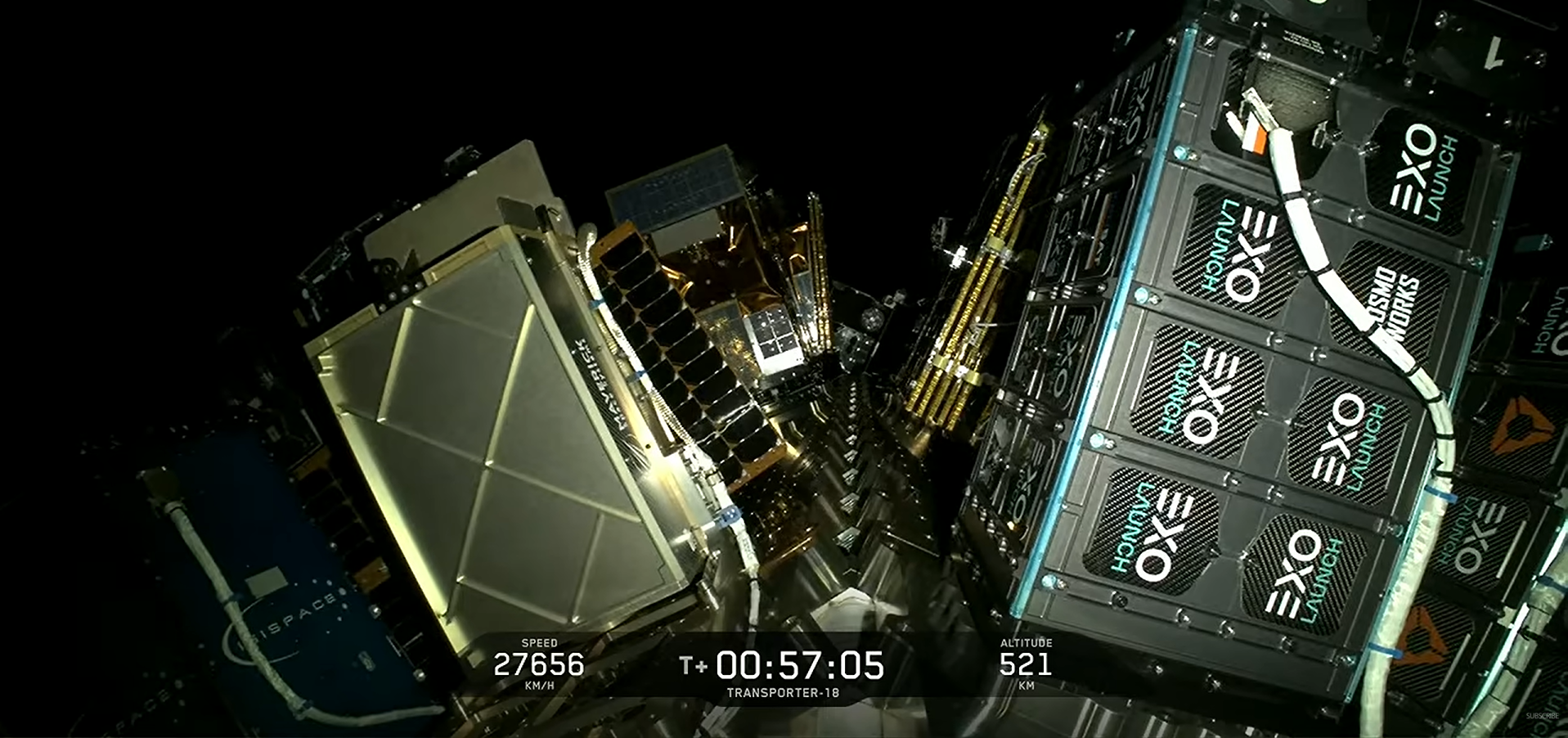
“GPDM Separation Confirmed.”
Two Propulsion Technologies. One Propellant.
Chemical and electric propulsion offer fundamentally different advantages. Chemical propulsion generates relatively high thrust, allowing spacecraft to execute maneuvers quickly. Electric propulsion produces much lower thrust but uses propellant far more efficiently, making it particularly valuable for gradual orbit changes, station keeping, and missions requiring substantial total velocity change.
Spacecraft can carry both technologies, but conventional architectures typically require separate propellants, storage tanks, feed systems, and supporting hardware. This increases spacecraft mass, volume, and complexity. Dual-mode propulsion offers a better approach...
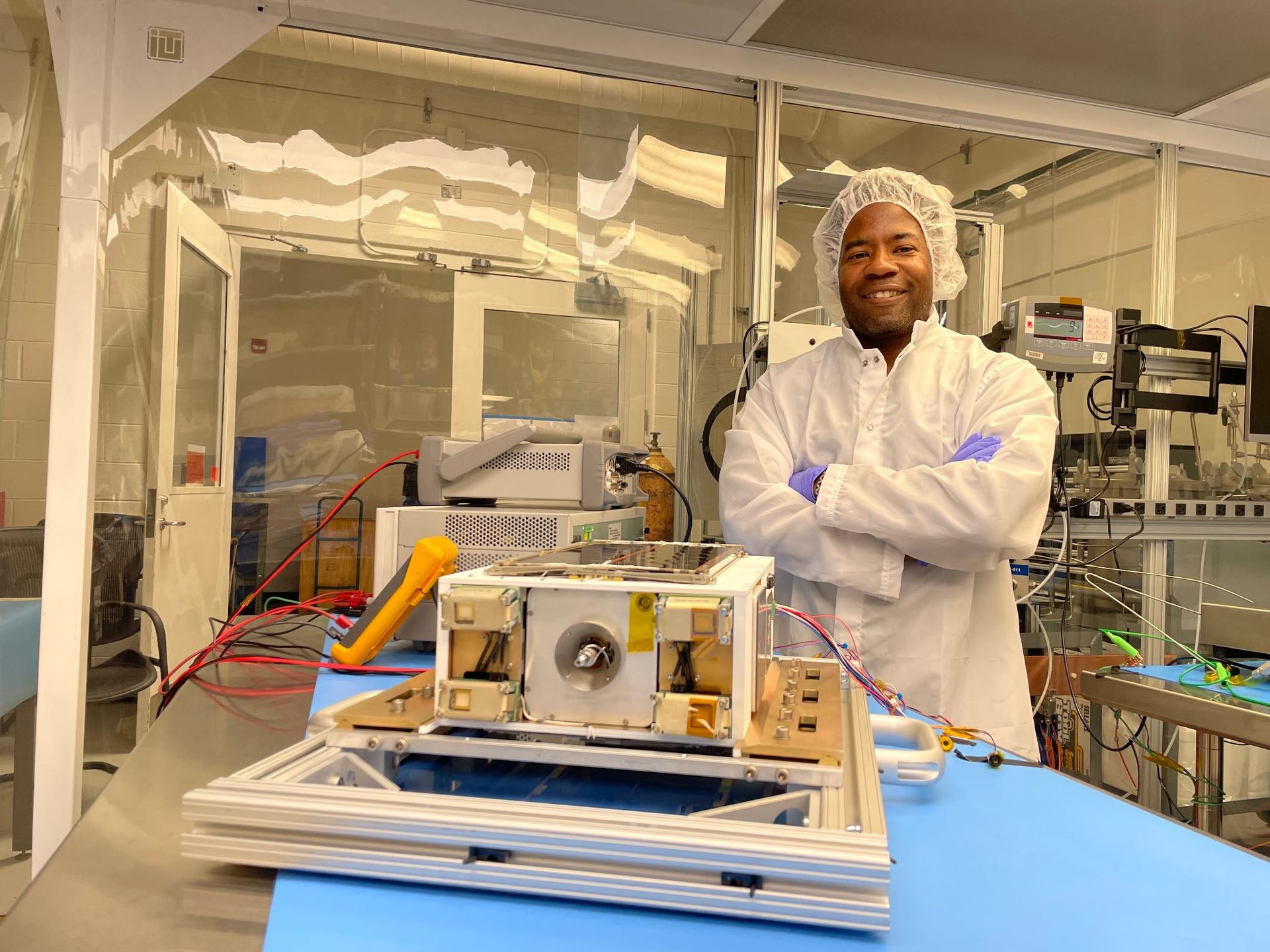
By using ASCENT, an advanced ionic-liquid propellant, both chemical and electric propulsion technologies can operate from a common propellant supply. The APDM spacecraft combines a chemical thruster with four electrospray electric thrusters, allowing mission operators to select the propulsion mode best suited to a particular maneuver.
For spacecraft designers, this creates new opportunities to balance thrust, efficiency, and mission flexibility without the full mass and complexity penalties of two independent propulsion systems. Chemical propulsion can provide responsiveness when time matters, while electric propulsion can deliver efficiency when propellant conservation is the priority.
Rather than committing a spacecraft to one propulsion approach, dual-mode technology gives mission architects greater freedom to use both.
Rubicon's Contribution: The Sprite Mobility Unit
At the heart of APDM's chemical propulsion system is Sprite, an integrated propulsion module developed and manufactured by Rubicon Space Systems.
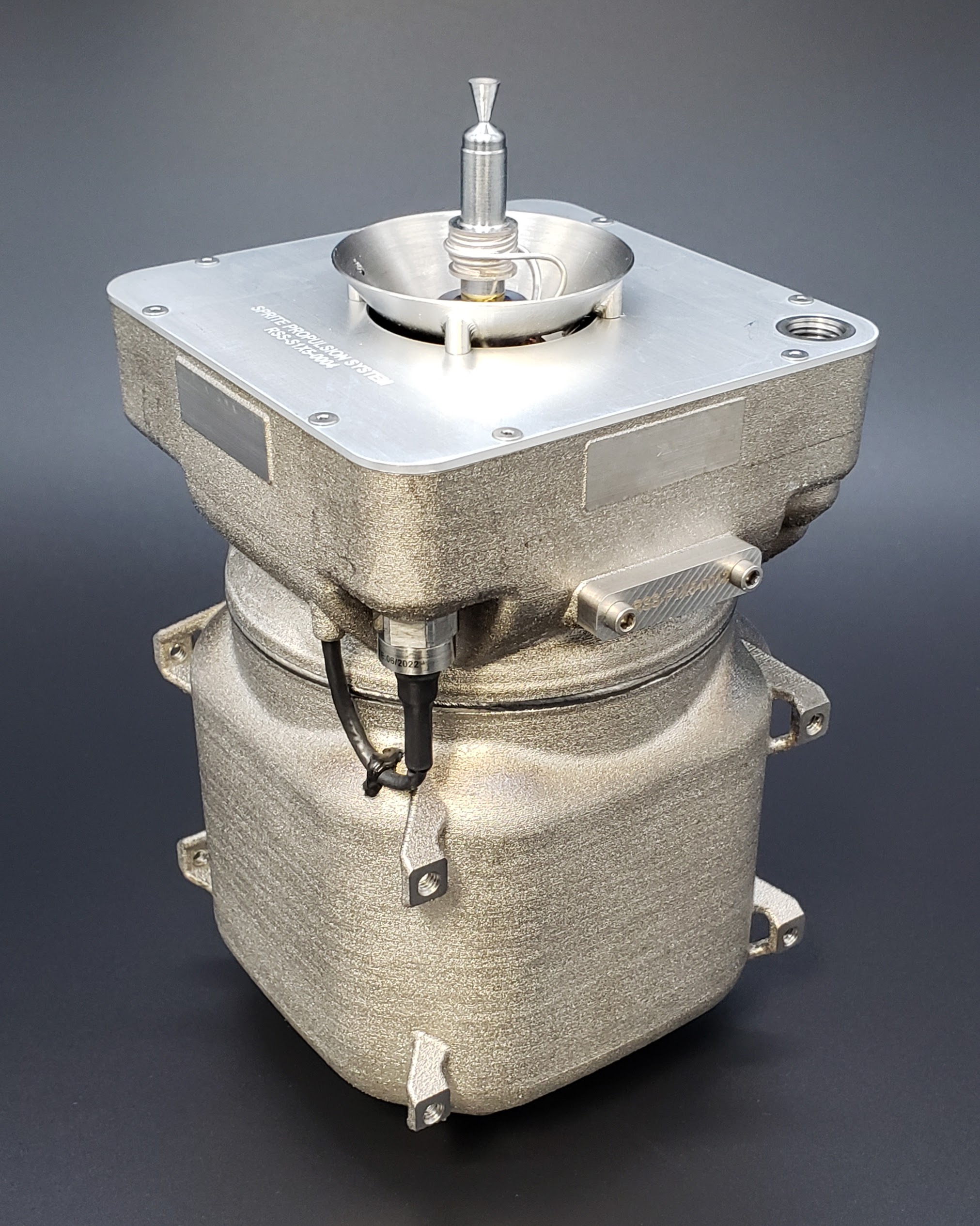
Sprite combines an ASCENT propellant tank, propellant management and feed hardware, valves, controller, thermal management hardware, and Rubicon's flight-proven 0.1-newton chemical thruster into a compact, integrated system.
For APDM, Sprite serves a particularly important role. In addition to providing the spacecraft's chemical propulsion capability, its propellant storage and feed architecture supports the electric propulsion system. This shared architecture is fundamental to demonstrating the practical advantages of dual-mode propulsion.
"Sprite represents much more than a thruster flying in space. Developing the tank, feed system, valves, controls, thermal management, and chemical thruster as an integrated system – and then making that system work as part of a larger dual-mode architecture – required addressing many of the challenges that stand between an emerging propulsion technology and a practical spacecraft capability. That's what makes this mission particularly meaningful. We're demonstrating an architecture that could give spacecraft operators much greater flexibility in how they approach mobility."
– Daniel Cavender, Director, Rubicon Space Systems
From Early Development to Flight
Rubicon's involvement in dual-mode propulsion traces back to the technology's earliest integrated demonstrations. In 2021, Plasma Processes supplied propulsion hardware for an early end-to-end dual-mode technology demonstration at NASA's Marshall Space Flight Center. Led by Cavender, then at NASA Marshall, the effort helped establish the technical foundation and initial mission architecture for what would become the GPDM project.
Since then, Plasma Processes established Rubicon to focus and continue advancing ASCENT propulsion technology, developing the integrated hardware and capabilities needed to move emerging propulsion concepts toward operational spacecraft systems.
The APDM mission represents an important continuation of that work, advancing dual-mode propulsion from ground demonstrations and component development to an integrated flight experiment.
Putting Dual Mode to Work in Space
Over the coming months, NASA and Georgia Tech will conduct a series of propulsion experiments designed to demonstrate how chemical and electric propulsion can work together aboard an operational spacecraft.
Following commissioning and initial system checkout, the spacecraft will begin short-duration propulsion maneuvers to characterize the performance of both modes. Subsequent operations will use chemical and electric propulsion to raise and lower the spacecraft's orbit, demonstrating their complementary capabilities under actual spaceflight conditions.
The mission will exercise more than the thrusters themselves. Operating a dual-mode propulsion system requires the coordinated performance of propellant storage and distribution, valves, thermal management, power electronics, command and control systems, and spacecraft guidance and operations. The experiment will provide valuable information about how these elements perform together in the space environment.
Importantly, APDM will demonstrate the operational flexibility of selecting between propulsion modes while drawing from the same propellant supply. These results will help inform how future spacecraft might allocate propulsion resources, manage maneuver timelines, and optimize mission performance.
Advancing the Future of Spacecraft Mobility
The significance of APDM extends well beyond demonstrating two different propulsion technologies aboard the same spacecraft.
Bringing dual-mode propulsion to flight has required addressing a broad range of technology development challenges, from component design and propellant compatibility to system integration, qualification, and spacecraft-level operations. Much of that work has already advanced the maturity of the technology and established a foundation for future propulsion architectures. The flight demonstration now offers the opportunity to validate those capabilities in orbit.
For Rubicon, APDM is both a milestone and a beginning. The experience gained developing Sprite, integrating the shared propulsion architecture, and supporting the flight demonstration will inform the next generation of ASCENT propulsion systems and future dual-mode applications.
As NASA and Georgia Tech begin exercising the spacecraft's propulsion capabilities over the coming months, Rubicon looks forward to the results and the opportunities they will create for future missions.
Ultimately, spacecraft should not always have to choose between thrust and efficiency. With dual-mode propulsion, they can have both.
Images courtesy of NASA, SpaceX, and Plasma Processes